The Solid Signet Ring: The Blank Canvas

Peelerie Editorial

Updated on

The Solid Signet Ring: The Blank Canvas - Peelerie

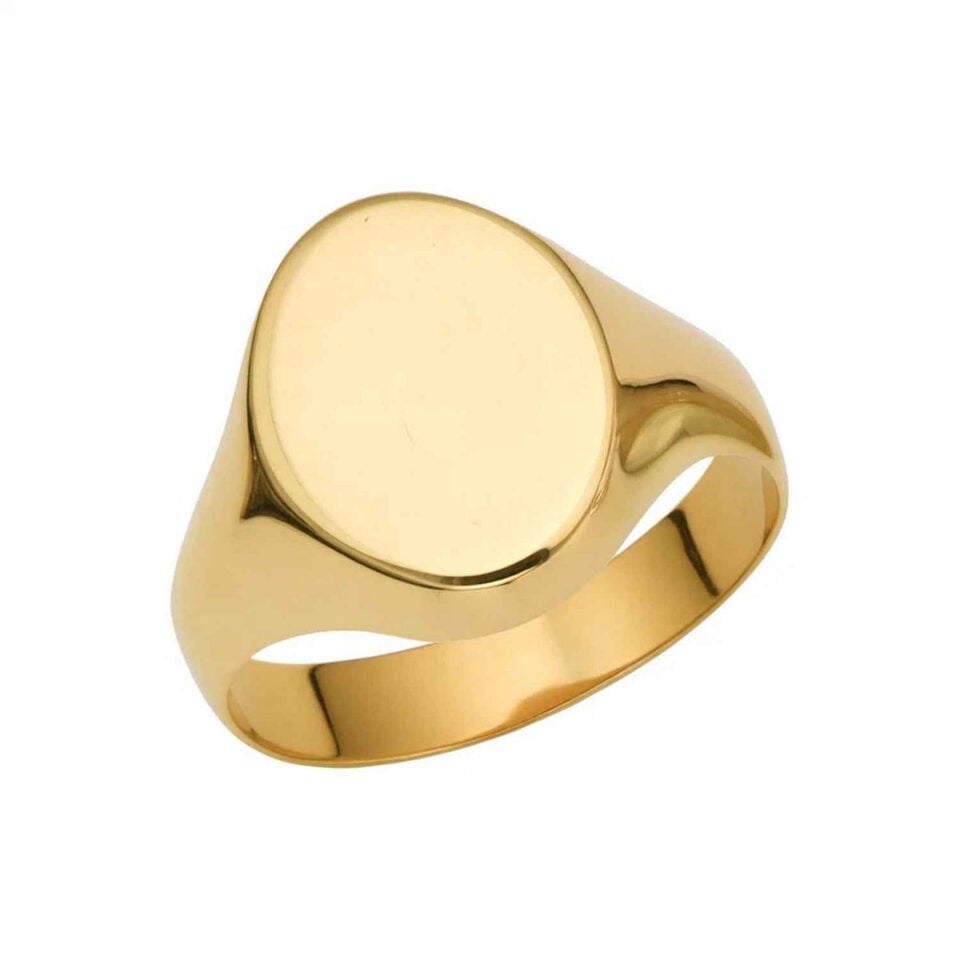
The modern signet ring serves a single structural purpose: physical weight. It is a heavy, flat plane of unyielding metal resting across the finger. It does not speak. It does not display a crest or reference a lineage. It commands the space it occupies through density and high-contrast reflection alone.

If you are establishing a heavy anchor on the hand, the engineering must hold. This is the definitive, factual guide to the material science of casting, the kinetic impact of a flat plane, and the architecture of the solid 14k gold signet ring.

The Material Science of the Block

A signet ring operates differently than a standard band. It carries a disproportionate amount of mass at the top of the finger. If that mass is compromised, the ring fails.

The Failure of Stamped Hollows

The vast majority of commercial signet rings are stamped: thin sheets pressed into shape and hollowed to save weight and cost. This creates a large visual footprint with reduced resistance to denting under blunt force. A hollow face can cave under impact. Solid architecture does not.

The Specific Gravity of the Solid Cast

We cast rather than stamp. A solid 14k gold signet begins as a molten block of alloy — 14k gold is 14 parts gold out of 24, meaning 58.3% gold by purity fraction. Britannica: karat definition (parts of 24)

That alloy baseline is why 14k is widely used for daily wear: it is engineered for durability compared to higher-purity (softer) gold. Brilliant Earth: 14k vs 18k (durability + composition)

Casting itself is an engineering method: investment (lost-wax) casting produces dense metal forms from a wax model, allowing thick, solid geometry and controlled mass distribution. Formlabs: lost-wax casting process

When poured into a solid mold, the alloy becomes a continuous block. The face is solid down to the core. There is no hollow undercarriage beneath it.

When you place this ring on your hand, the immediate physical reaction is unmistakable — a gravitational pull that most rings do not produce. It sits heavy. It grounds the wearer. It absorbs blunt-force impact without denting, yielding, or compromising its structural geometry.

The Architecture of the Silhouette

We strip away the engraving. The visual identity of the blank signet aligns with the Midnight aesthetic — stark, heavy, and unapologetic.

The Blank Geometric Plane

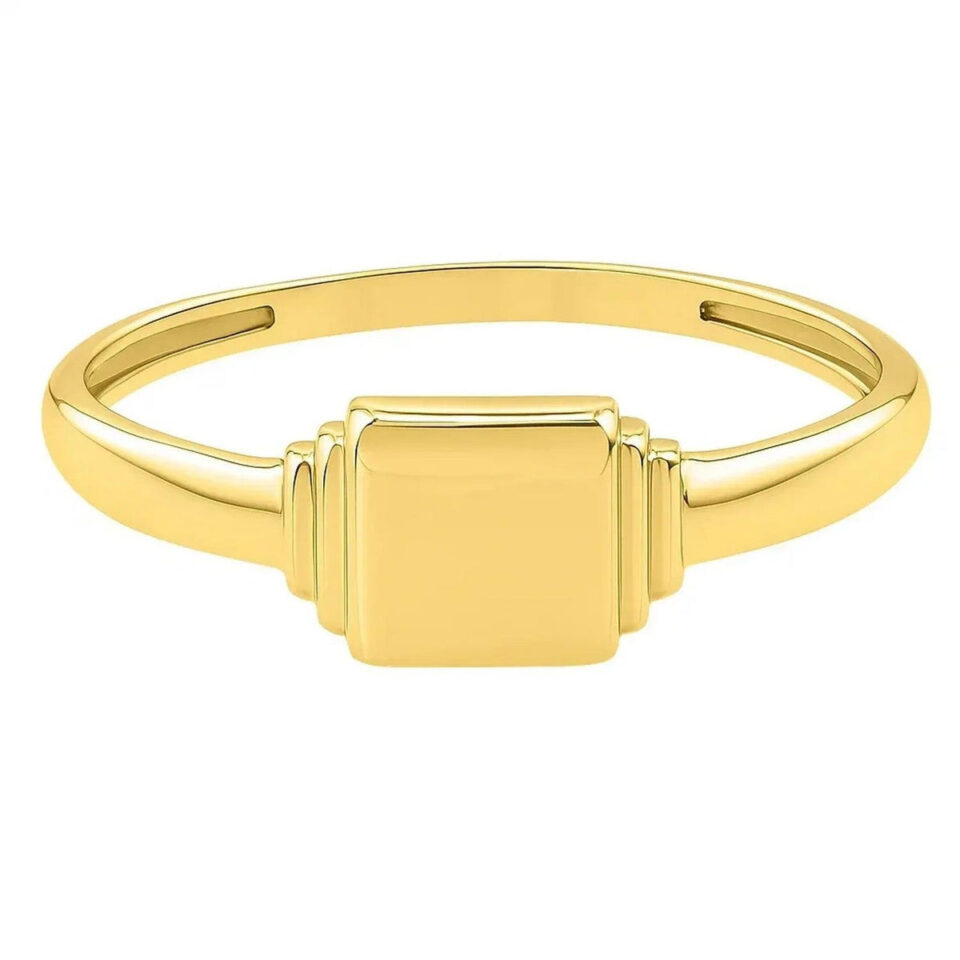
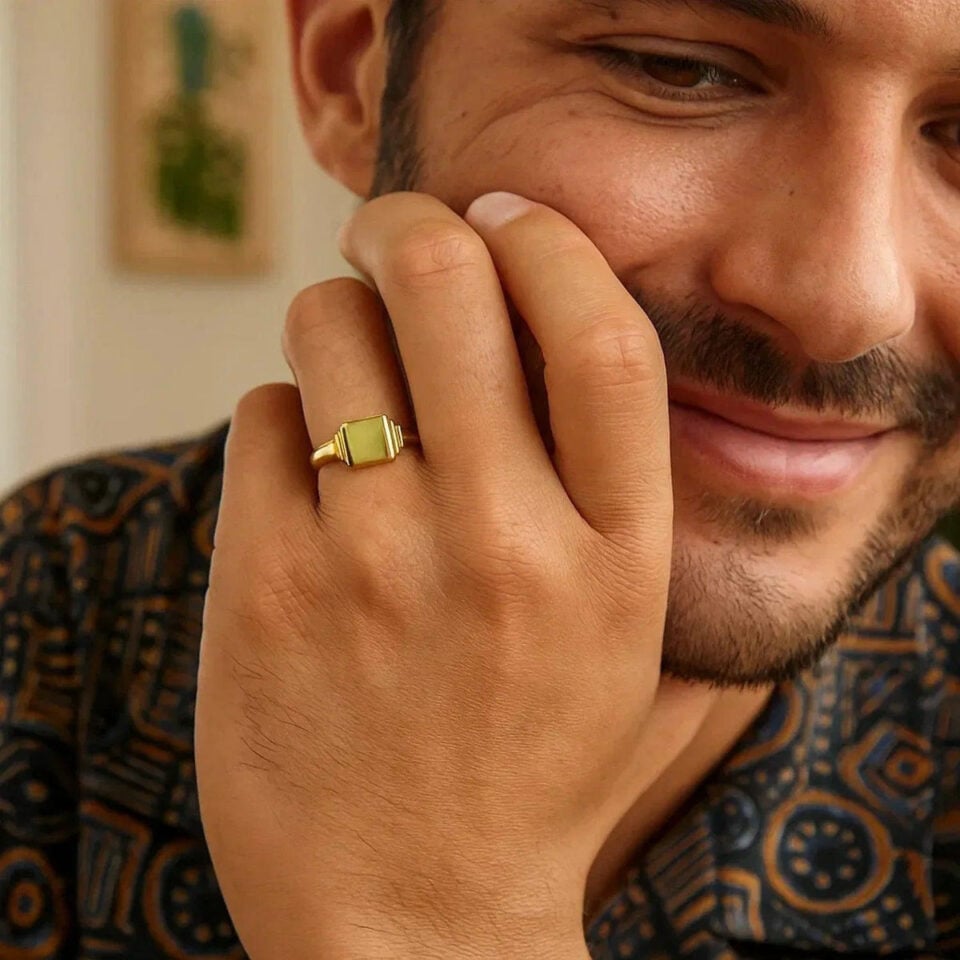
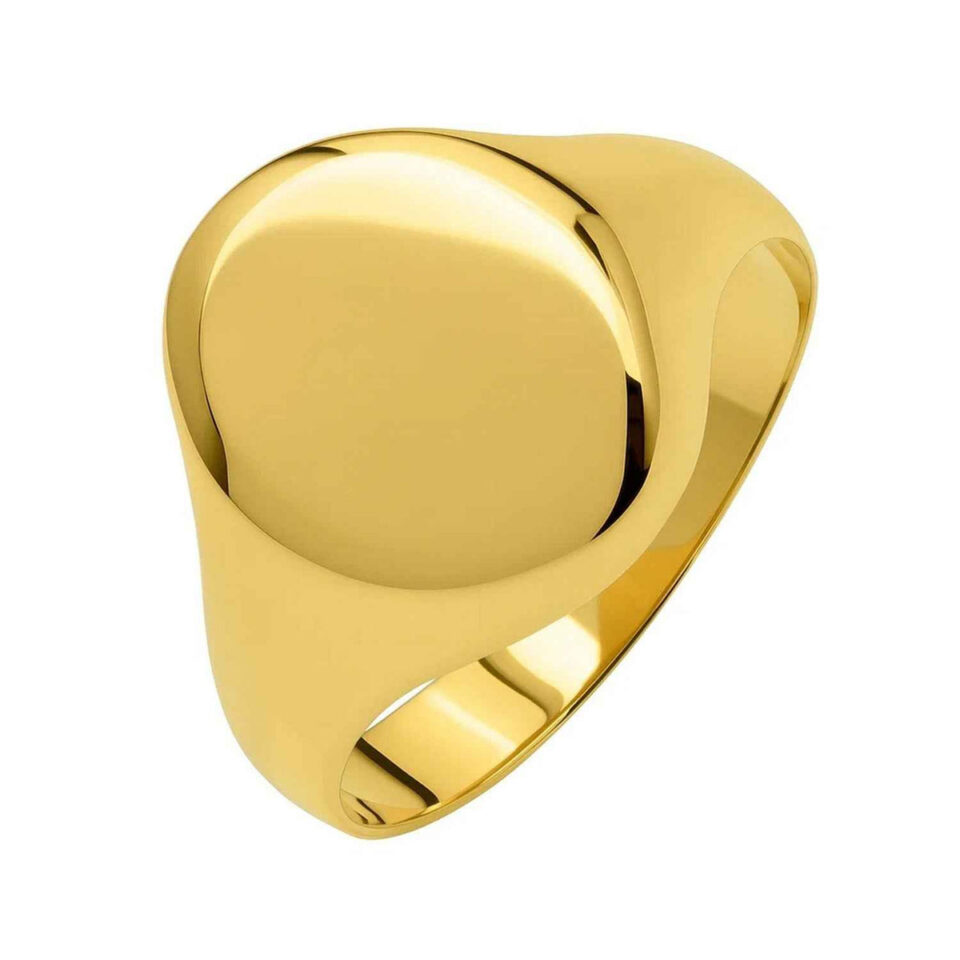
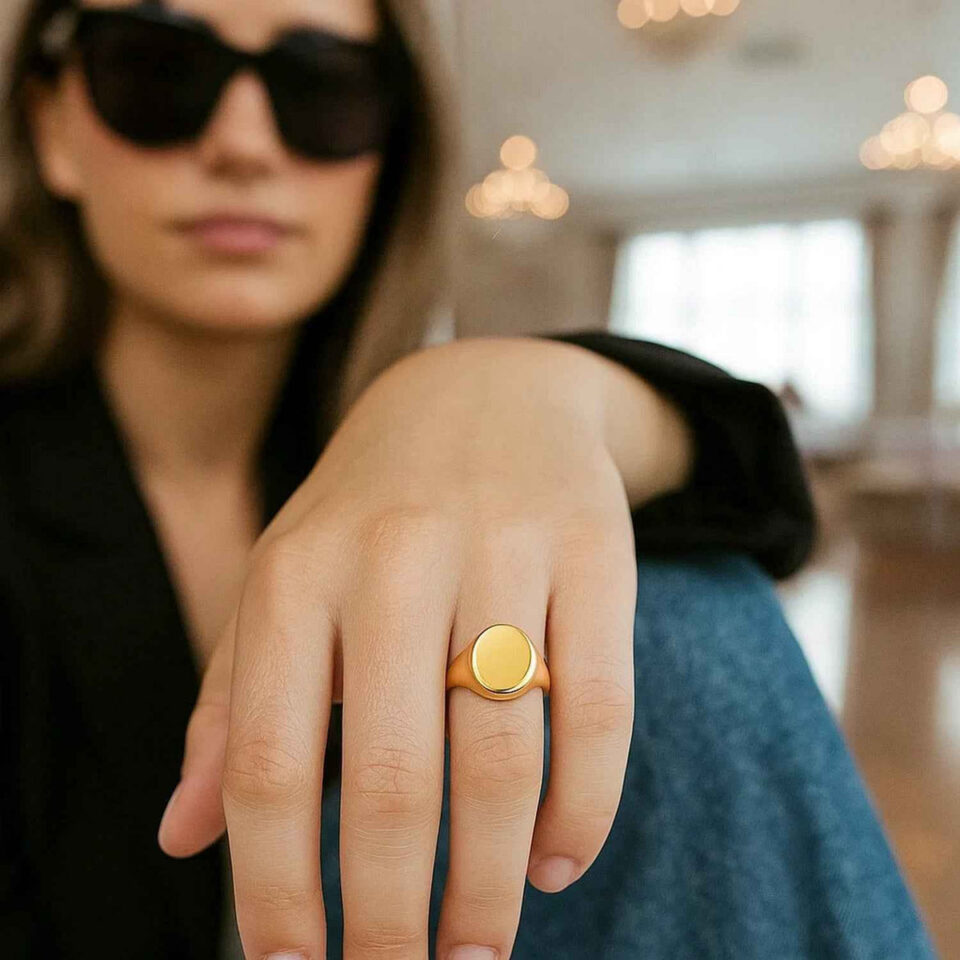
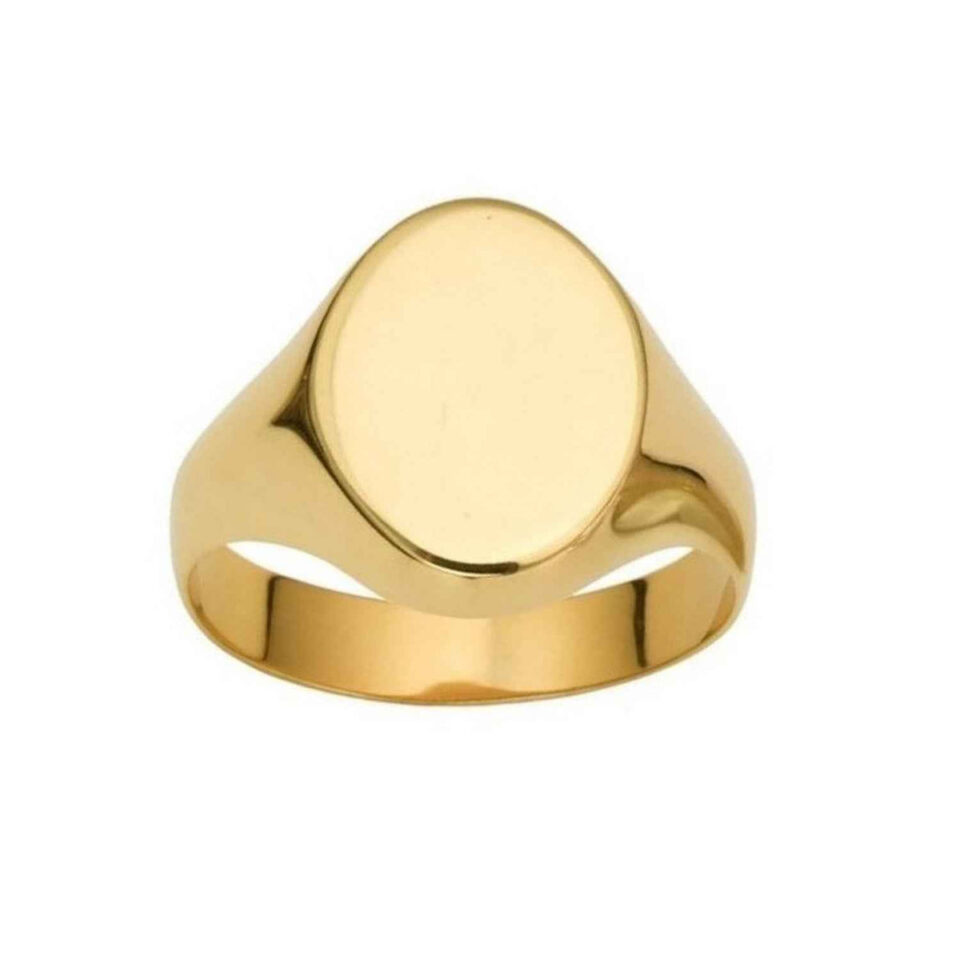
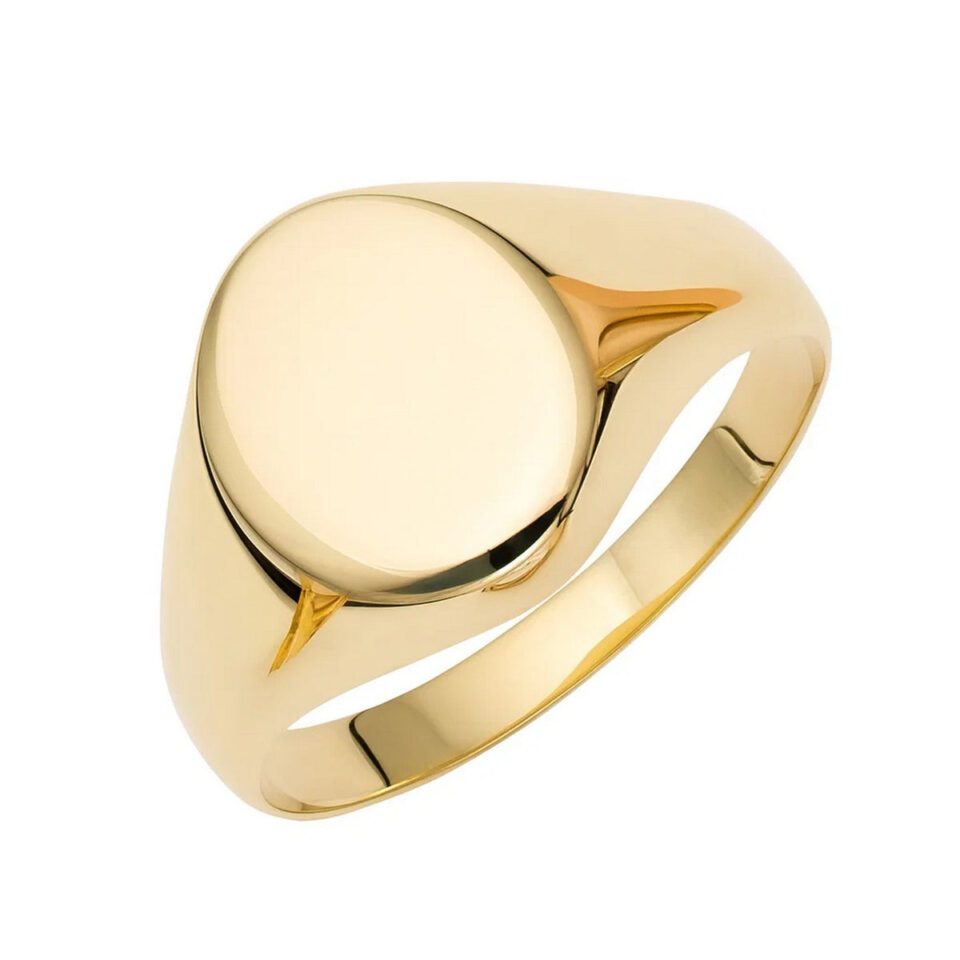
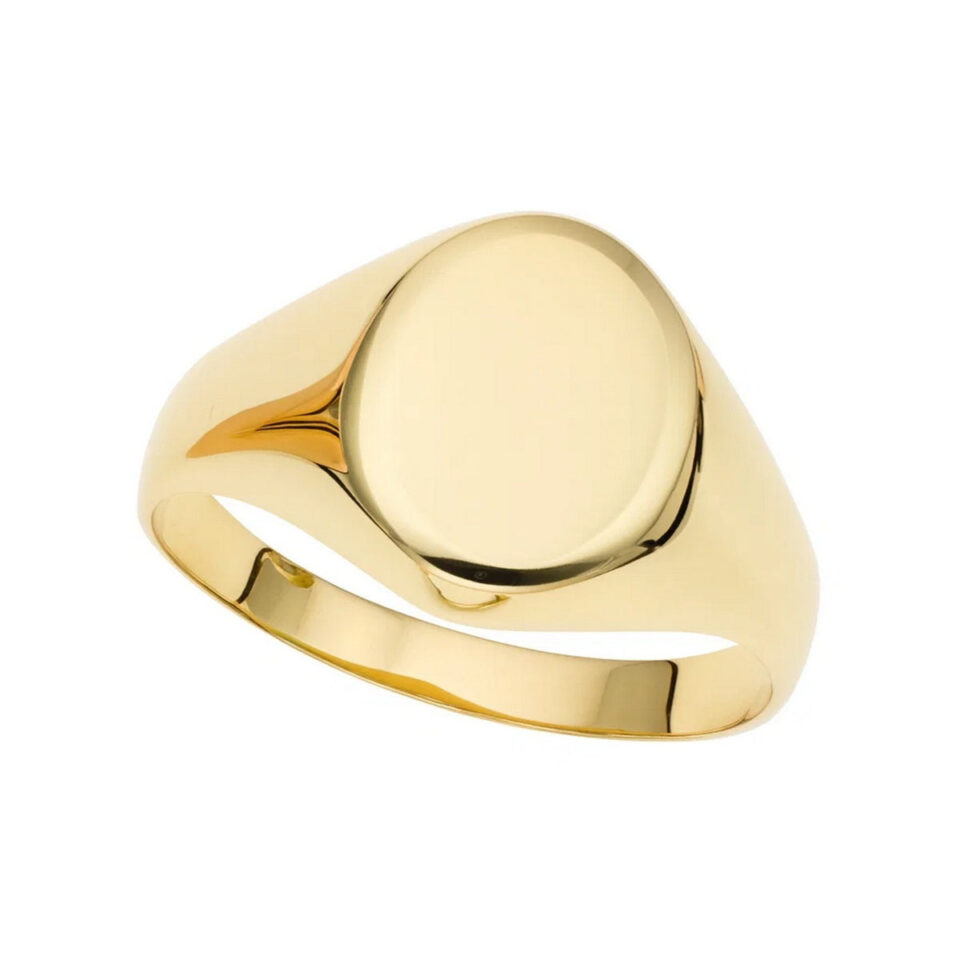
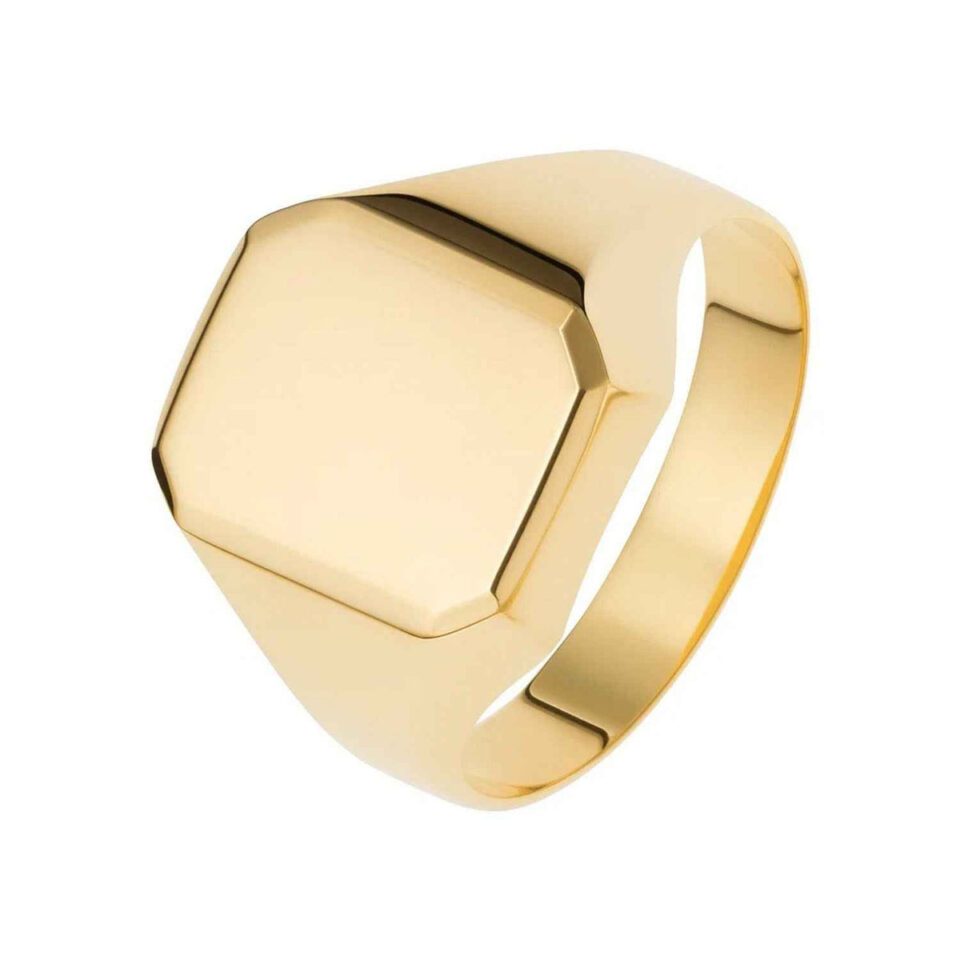
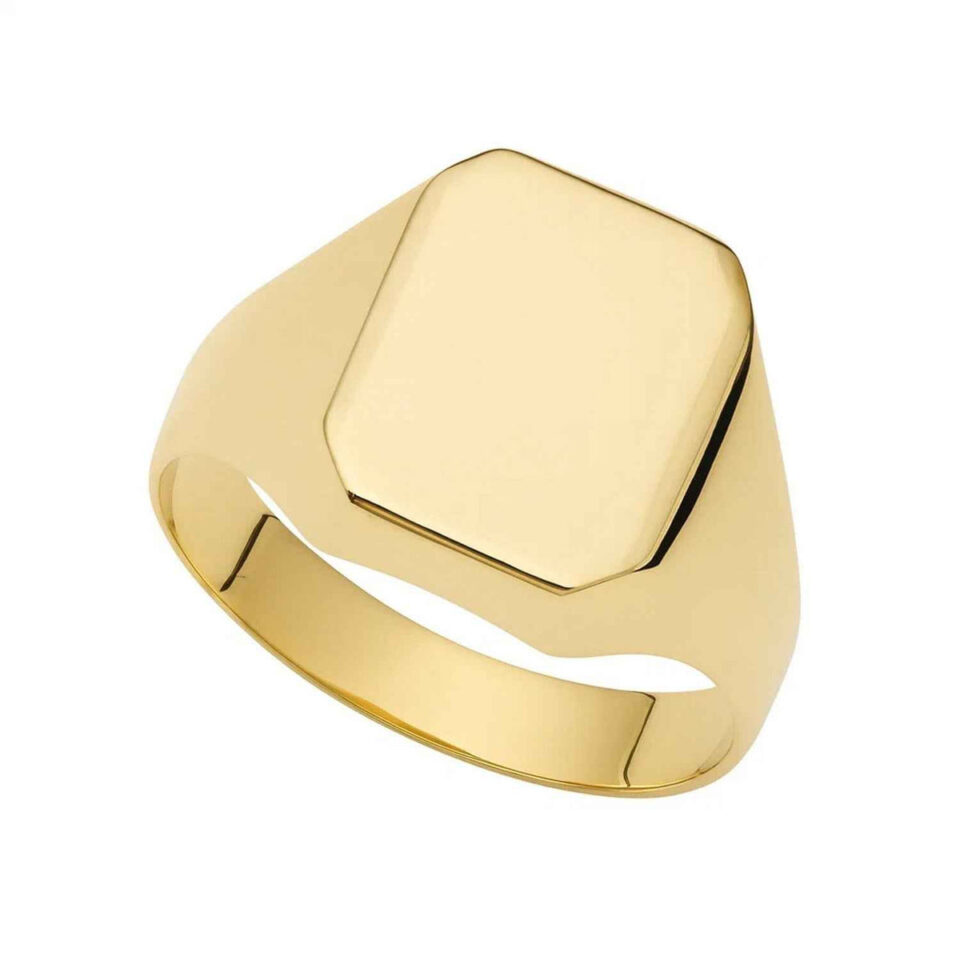
A signet ring is defined by its face. Whether engineered as a sharp square or an elongated oval, the plane must remain flat and disciplined.

This flat plane acts as a continuous mirror. Polished 14k gold catches ambient light and reflects it with cold intensity. In a dark environment, the signet becomes a singular flashpoint — the Museum Effect reduced to one plane of metal.

The High-Contrast Taper

A heavy block cannot sit comfortably on a moving joint without taper. The face must transition into a compressed lower band so the finger can bend and articulate without restriction. Visual weight stays high. Kinetic utility stays intact.

Environmental Utility: The Kinetic Reality

The hand is the most aggressive kinetic environment on the body. The signet must absorb the friction of the journey rather than resist it.

The Mechanics of the Patina

A high-polish signet will not remain perfectly mirrored forever. This is not a flaw — it’s the record. Over years, micro-scratches diffuse reflection into a soft industrial sheen. Earned finish. Not manufactured aging.

Chemical Inertia and Daily Exertion

Solid gold does not rust like iron-based metals. For daily wear, 14k is a practical standard because it balances gold content with durability. 14k daily-wear durability reference

The Signet Ring FAQ

Question Factual Answer
Which finger should a signet ring be worn on? Wherever it carries the most authority for your hand. Historically worn on the pinky for sealing, modern solid signets often wear best on the index or middle finger where the finger thickness balances the mass.
Can I engrave a blank signet ring later? Yes. Solid cast 14k gold has the depth for laser engraving or traditional hand work. The blank plane remains the definitive execution — it commands through absence.
Will a solid signet ring feel too heavy for daily wear? It will feel present — that’s the intent. Most people acclimate quickly. After that, the weight becomes a subconscious anchor.
Why does my signet ring spin on my finger? Top-heavy imbalance plus loose fit. A signet needs an exact fit at the base of the finger so gravity cannot roll the face downward.


A signet ring is not a display of lineage. It is a blank canvas forged from a solid block of 14k gold — heavy on the hand, resistant to the daily journey, and honest about what it accumulates over time.

The blank face is not empty. It is waiting.

Explore the Solid Gold Signet Ring Collection

Back to blog