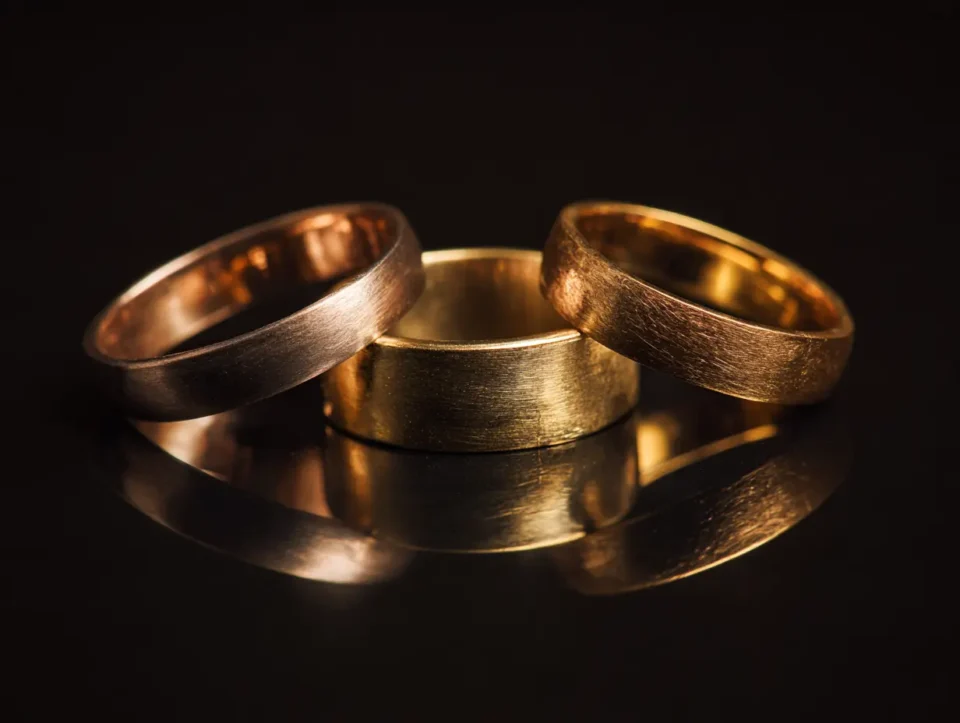
10K gold is 41.7% gold and the hardest and least expensive; 14K is 58.3% gold and the everyday balance of color, durability and price; 18K is 75% gold, richer in color, softer and more expensive. For most jewelry worn daily, 14K is the best choice; 18K suits pieces worn with more care.
Karat is the most important number on a gold piece and the most misunderstood. Higher is not simply better. A higher karat means more gold, a deeper color and a higher price, but also a softer metal. The right karat depends on what the piece is and how you will wear it.
10K vs 14K vs 18K at a glance
| 10K | 14K | 18K | |
|---|---|---|---|
| Gold content | 41.7% | 58.3% | 75% |
| Stamp | 10K, 417 | 14K, 585 | 18K, 750 |
| Color | Paler yellow | Warm yellow | Rich, deep yellow |
| Hardness | Hardest | Hard | Softer |
| Scratch and dent resistance | Best | Very good | Good |
| Tarnish | Can darken slightly | Very little | Very little |
| Allergy risk | Highest of the three | Low | Lowest |
| Gold value per gram | Lowest | Middle | Highest |
| Best for | Hard-wearing rings and chains on a budget | Everyday jewelry of all kinds | Heirloom pieces and rings worn with care |
Gold content follows Wikipedia’s entry on fineness.
Color: how much gold you can see
Pure gold is a deep, saturated yellow. Every karat below 24 dilutes it with paler metals, so the color steps down as the karat does. 18K has the richest yellow of the three; 14K is a warm, classic yellow; 10K is noticeably paler. Side by side the difference is clear; worn alone, 14K reads as unmistakably gold. In white and rose gold, the alloy metals and any rhodium plating matter more than the karat.
Durability: why lower karat is harder
Gold is the soft part of the alloy. The copper, silver and zinc mixed into it strain its crystal structure and make it harder to deform, so the more of the alloy that is not gold, the harder the metal. That makes 10K the most scratch and dent resistant of the three and 18K the softest. Published hardness figures for annealed 14K alloys run from about 120 to 183 on the Vickers scale, against about 150 for a common annealed 18K yellow alloy; the exact figure depends on the recipe. Our guide to how hard 14K gold is explains the scales.
In practice: an 18K ring worn daily will show scratches and wear sooner than a 14K one, and a thin 18K band will bend more easily. For chains, which rub constantly at their links, 14K is the long-wearing choice.
Price and value per gram
The price of gold jewelry follows its gold content. At the same weight, 18K contains about 29% more gold than 14K, and 14K about 40% more than 10K, so the metal value rises accordingly. That is a useful way to compare prices: divide the price by the weight in grams, and compare like with like, same karat and same construction.
Skin and allergies
Gold itself is very well tolerated. Reactions usually come from the other metals in the alloy, and lower karats contain more of them. 10K is the karat most likely to discolor skin or irritate sensitive skin, 18K the least. Some white gold alloys contain nickel, one of the most common metal allergies; if that applies to you, ask for nickel-free white gold or choose yellow gold. Our article on why jewelry turns skin green explains the chemistry.
Which karat should you choose?
Engagement and wedding rings: 14K for daily wear; 18K if you want the richer color and accept a little more care and occasional polishing.
Chains: 14K. It wears well at the links and keeps its color. 10K is a sound budget choice for heavier chains, especially for men.
Earrings: 14K for posts and hoops worn daily. 18K for sensitive ears, if budget allows.
Pendants and charms: any of the three. A pendant takes little wear, so color and budget can lead.
Bracelets and bangles: 14K or 10K. Bracelets take the most knocks of any jewelry.
Is 10K gold real gold?
Yes. 10K is genuine gold alloy, correctly stamped 10K or 417, and is widely sold as gold in the United States. It contains less gold than 14K, so it is less valuable at the same weight, but it is the most durable of the three. Our guide to what 14K means covers stamps and what they guarantee.
Shop 14K goldShop gold chainsGold rings
Karat FAQ
Is 14K or 18K better?
For everyday wear, 14K: it is harder and less expensive. 18K has a richer color and more gold, and suits pieces worn with more care.
Is 10K gold worth buying?
Yes, for hard-wearing pieces on a budget. It is the most durable karat, with a paler color and less gold.
Which karat is best for a ring worn every day?
14K is the usual choice: durable enough for daily wear with a warm gold color.
Does 18K gold scratch more easily than 14K?
Yes, generally. Higher karat gold is softer, so it scratches and dents more easily.
Which karat is best for sensitive skin?
Higher karats contain fewer other metals, so 18K is least likely to cause a reaction. Avoid nickel white gold if you are sensitive.
Why is 18K gold more expensive?
It contains 75% gold, against 58.3% for 14K, so there is more gold in every gram.