Material Standard // 05
Hardness, toughness,
care.
Colored stones differ far more than diamonds do in how they wear. Hardness, toughness and care decide where a stone belongs: on a ring that meets the world all day, or on earrings and pendants that are more protected.
Hardness and toughness
Hardness, measured on the Mohs scale from 1 to 10, is resistance to scratching. Toughness is resistance to chipping and breaking. A stone can be hard but brittle, so both matter.
| Stone | Mohs hardness | Wear |
|---|---|---|
| Diamond | 10 | Suited to every kind of jewelry |
| Sapphire and ruby | 9 | Excellent for rings |
| Topaz | 8 | Good; avoid sharp knocks |
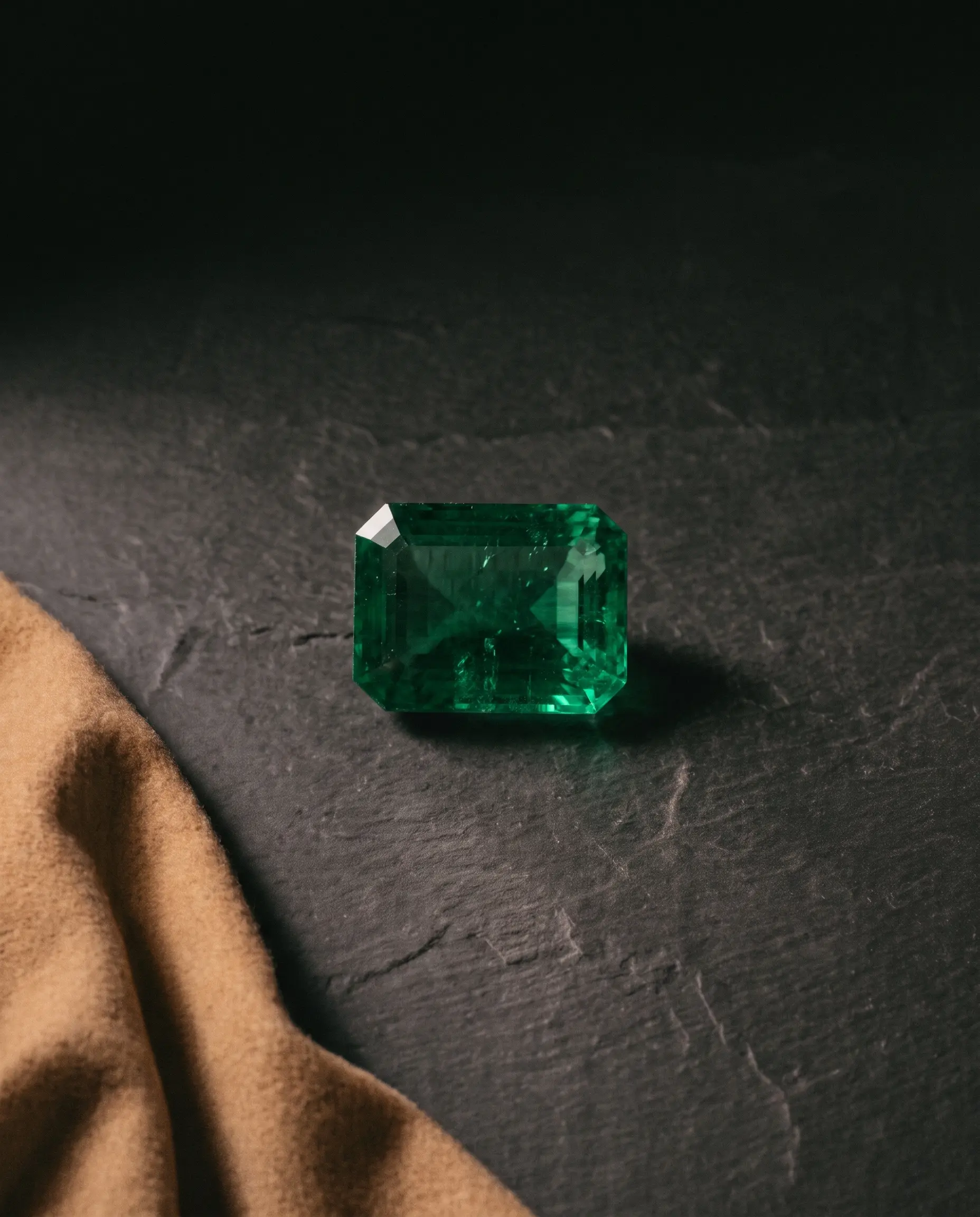
| Emerald | 7.5 – 8 | Often has inclusions; protective settings and gentle care |
| Aquamarine | 7.5 – 8 | Good for most jewelry |
| Garnet | 6.5 – 7.5 | Good for most jewelry |
| Amethyst and citrine | 7 | Good for most jewelry |
| Onyx | 6.5 – 7 | Good; keep away from harder stones |
| Peridot | 6.5 – 7 | Better in earrings and pendants |
| Opal | 5.5 – 6.5 | Delicate; protective settings |
| Pearl | 2.5 – 4.5 | Delicate; last on, first off |
Treatments
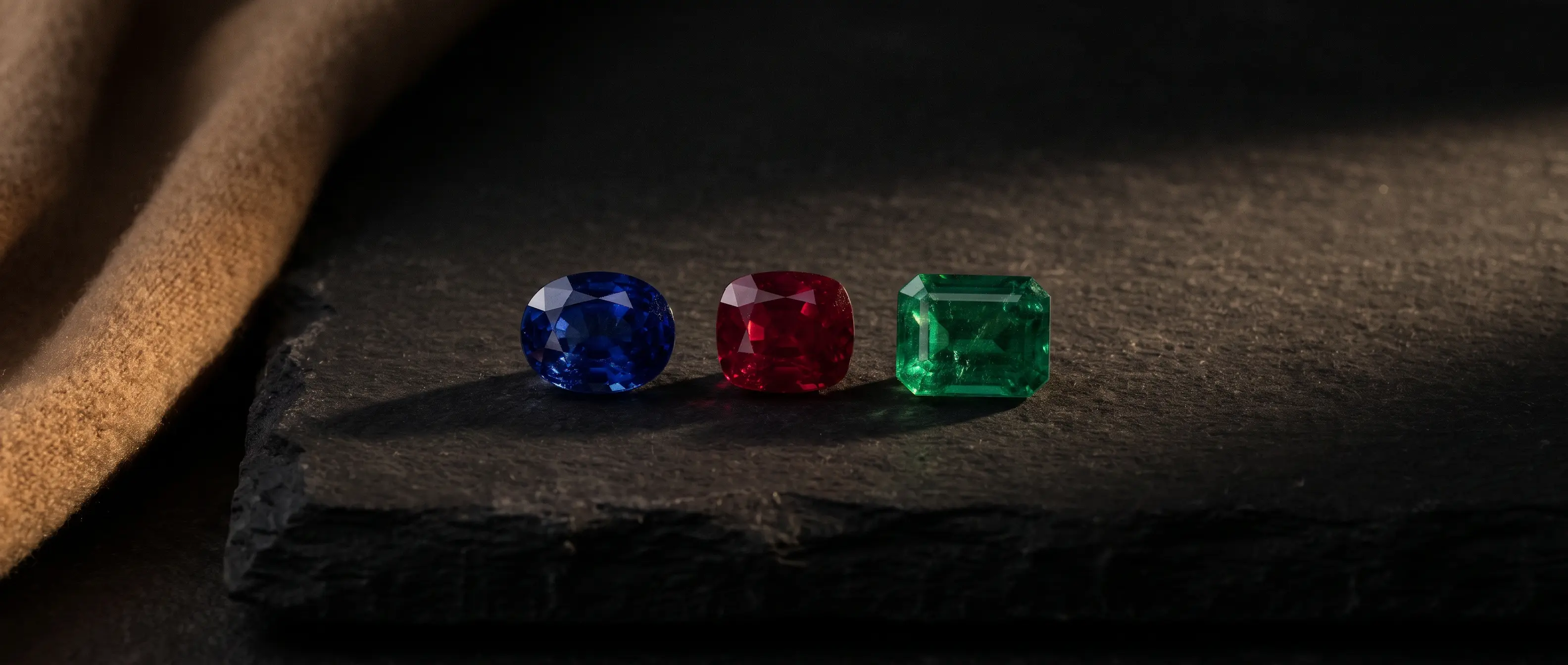
Many colored stones are treated to improve their color or clarity; heating sapphire and oiling emerald are long-established examples. Where a Peelerie piece is set with a colored stone, its product page names the stone.
Care
Clean colored stones with warm water, mild soap and a soft brush. Avoid ultrasonic cleaners and steam for emeralds, opals, pearls and onyx, and keep pieces apart from harder stones that can scratch them.
Colored stones
All gemstone jewelry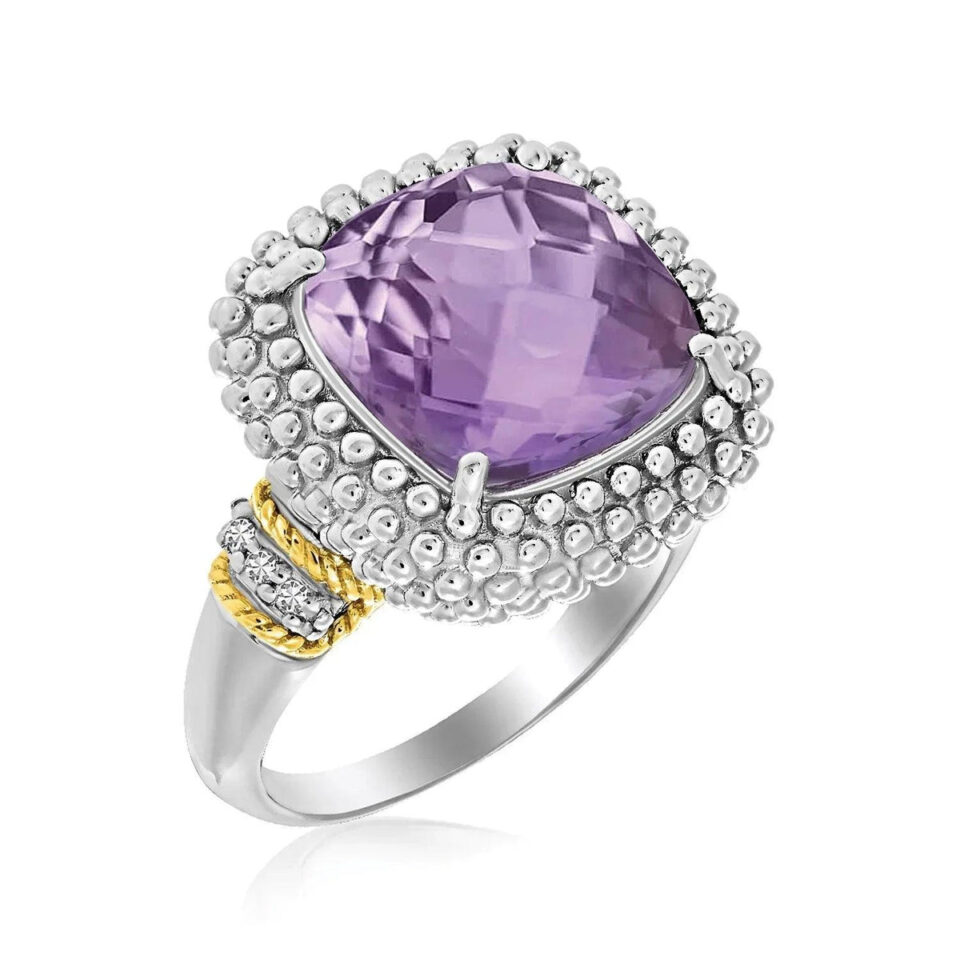
18K Gold and Sterling Silver Lab-Grown Diamond Popcorn Amethyst Accents Ring
18K Gold and Sterling Silver · Lab-Grown Diamonds
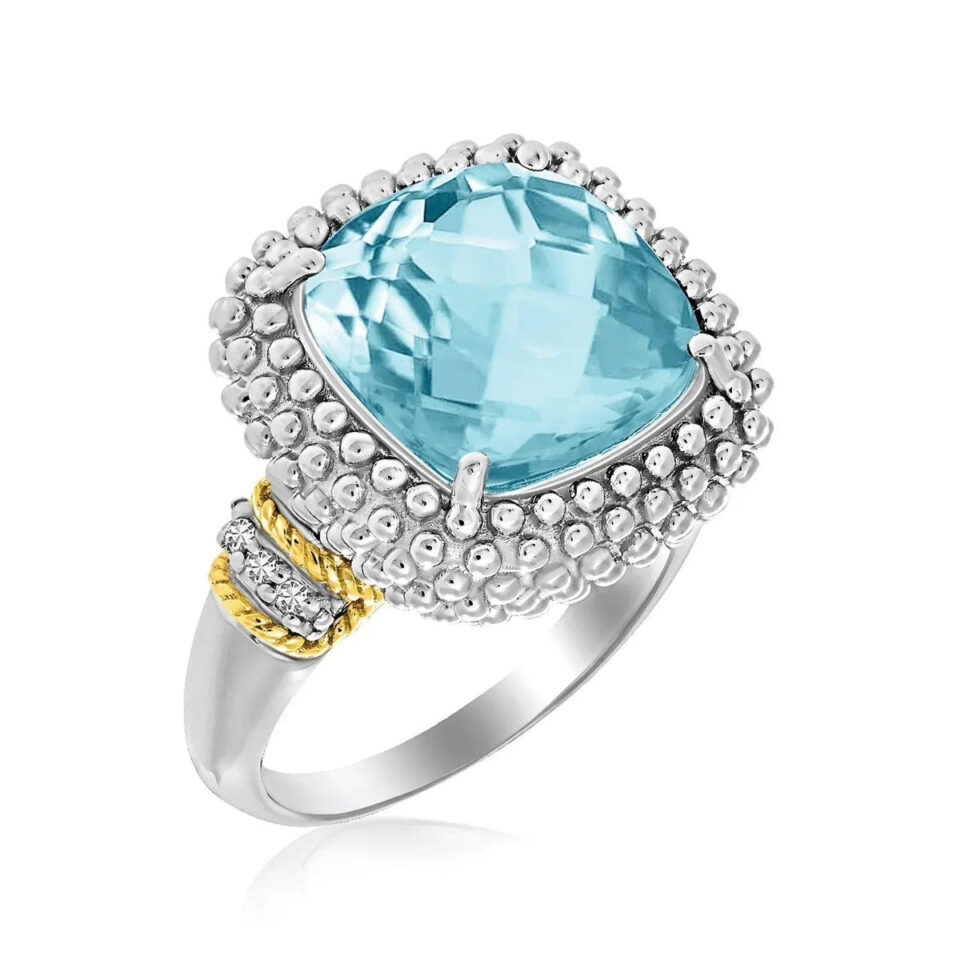
18K Gold And Sterling Silver Lab-Grown Diamond Ring
18K Gold and Sterling Silver · Lab-Grown Diamonds
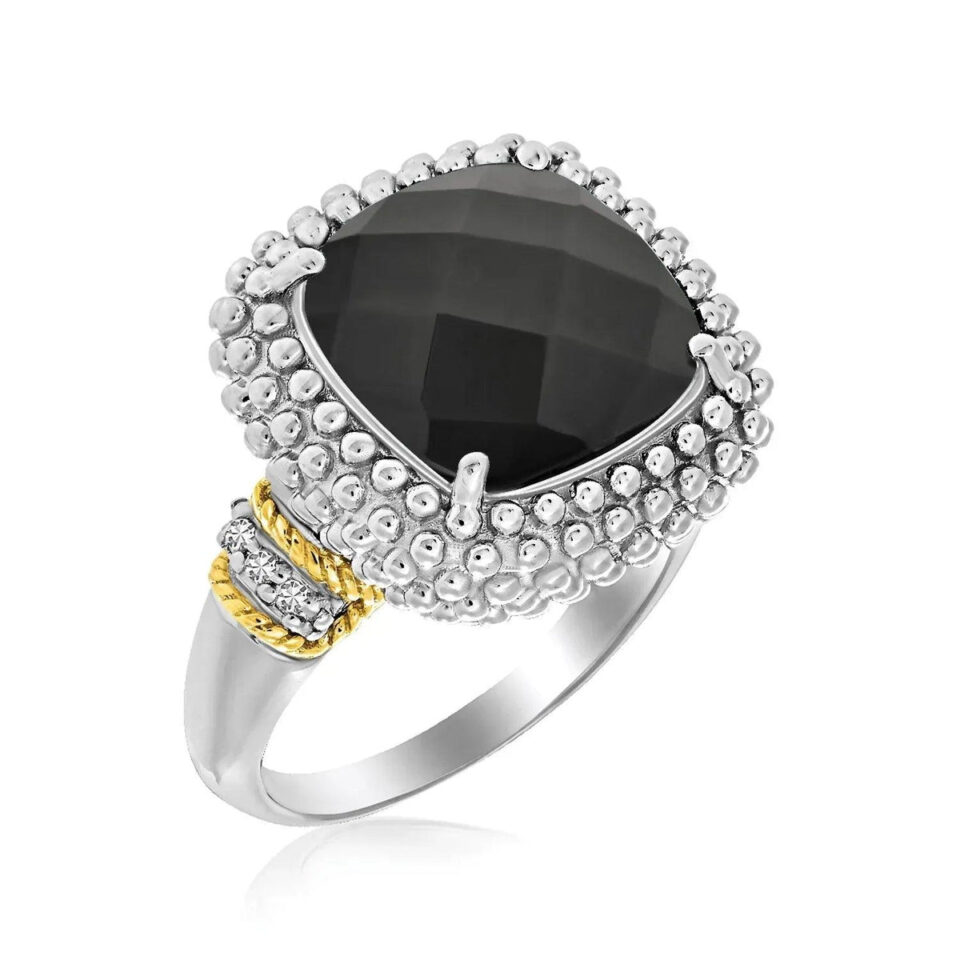
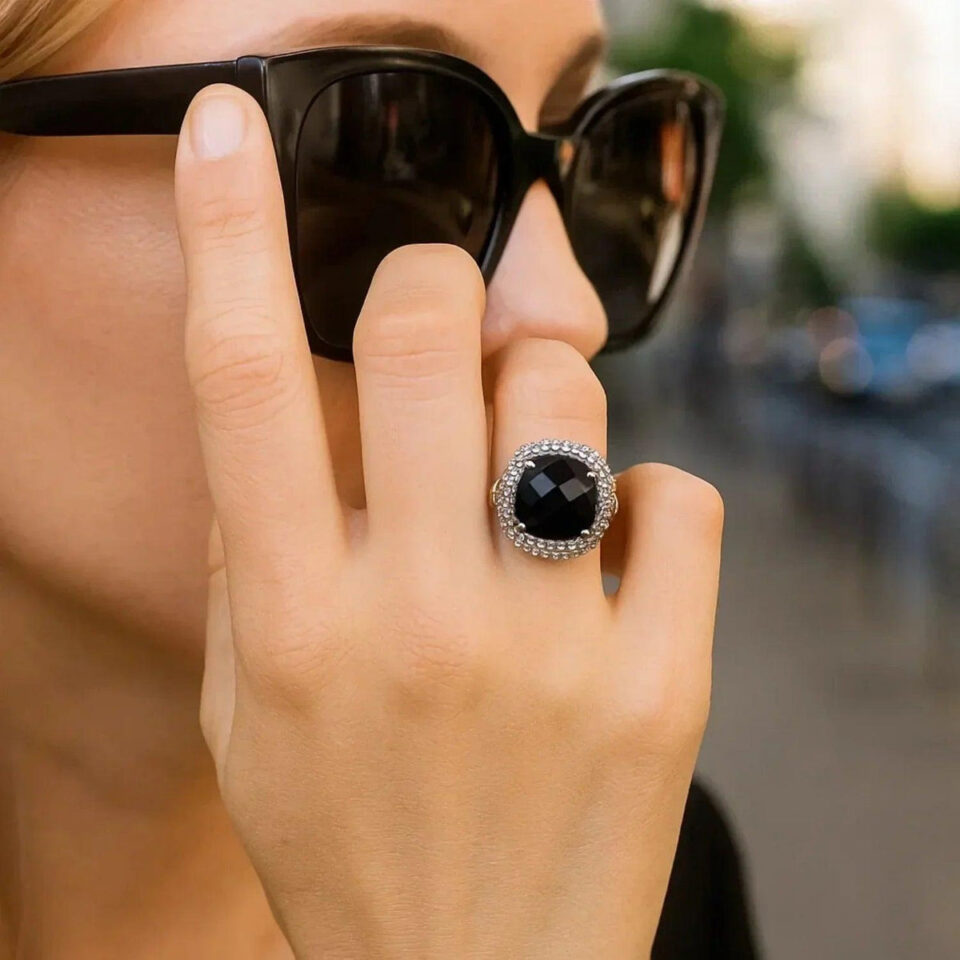
18K Gold And Sterling Silver Cushion Lab-Grown Diamond Ring
18K Gold and Sterling Silver · Lab-Grown Diamonds
Continue