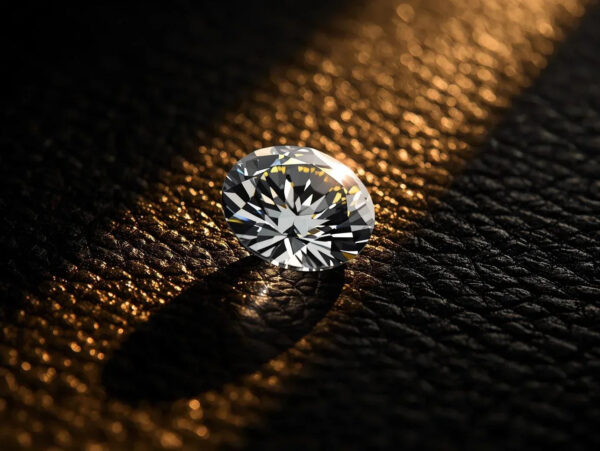
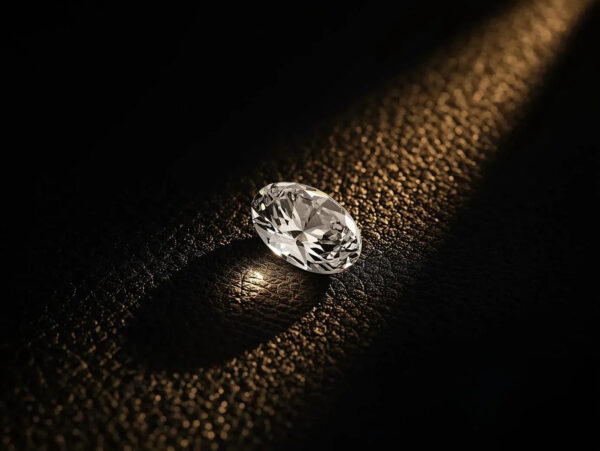
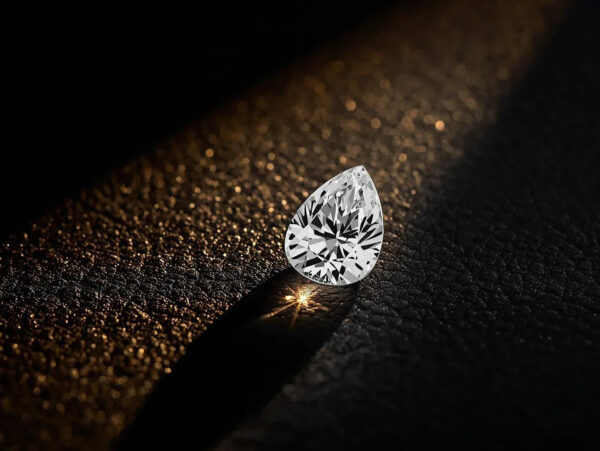
If you are comparing lab-grown and natural diamonds, you do not need a sales pitch built on emotion. You need the facts.
The modern buyer requires a physical anchor that does not compromise its structural integrity or its ethical baseline. This is the definitive, factual guide to the material science, the architecture, and the origin requirements of the modern diamond.
Deep Material Science (The Carbon Lattice)
To understand the lab-grown diamond, you must strip away the marketing and look at the atomic structure. A diamond is a carbon lattice — and its hardness is measured, not claimed.
The Physics of Crystallization
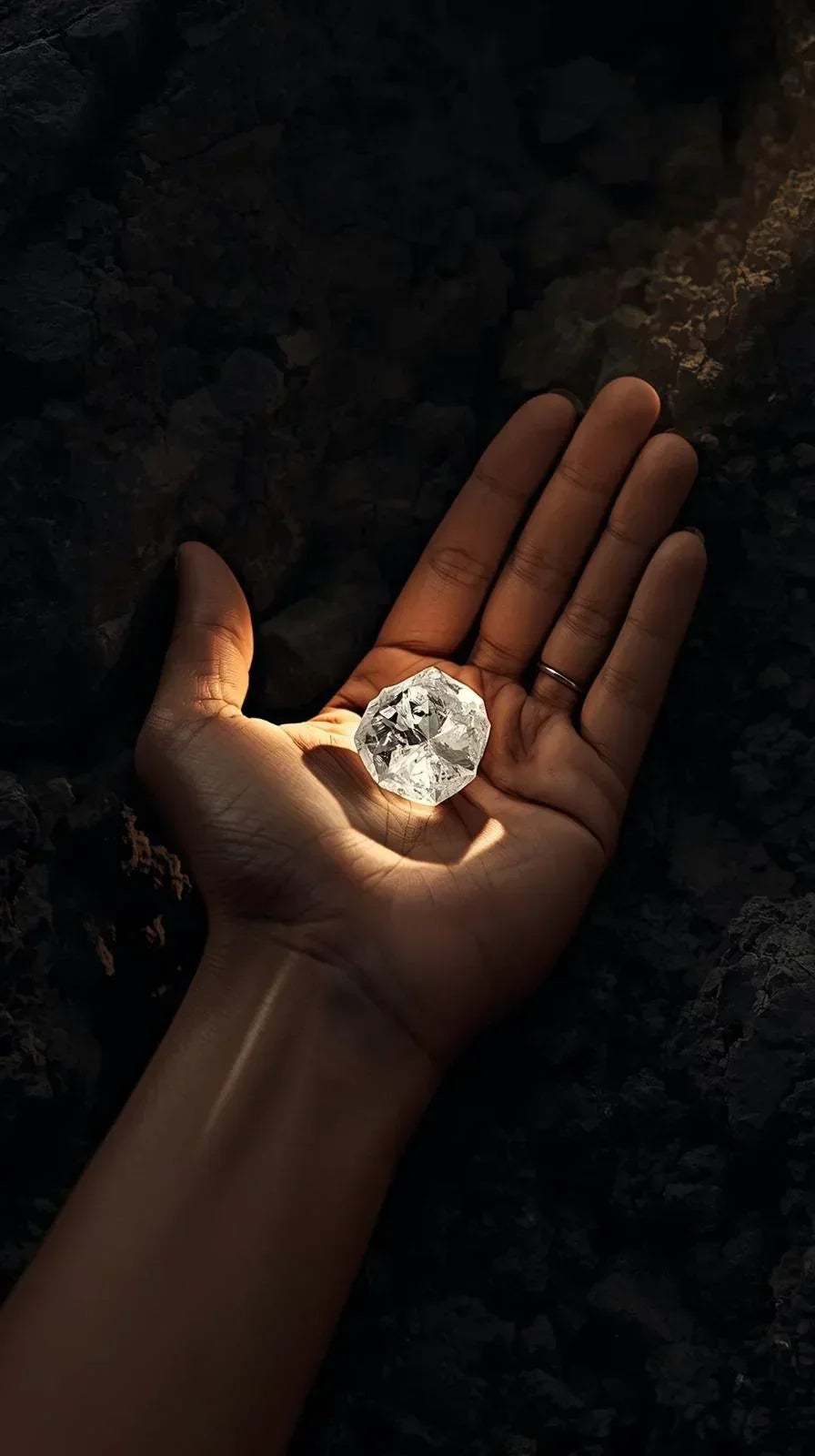
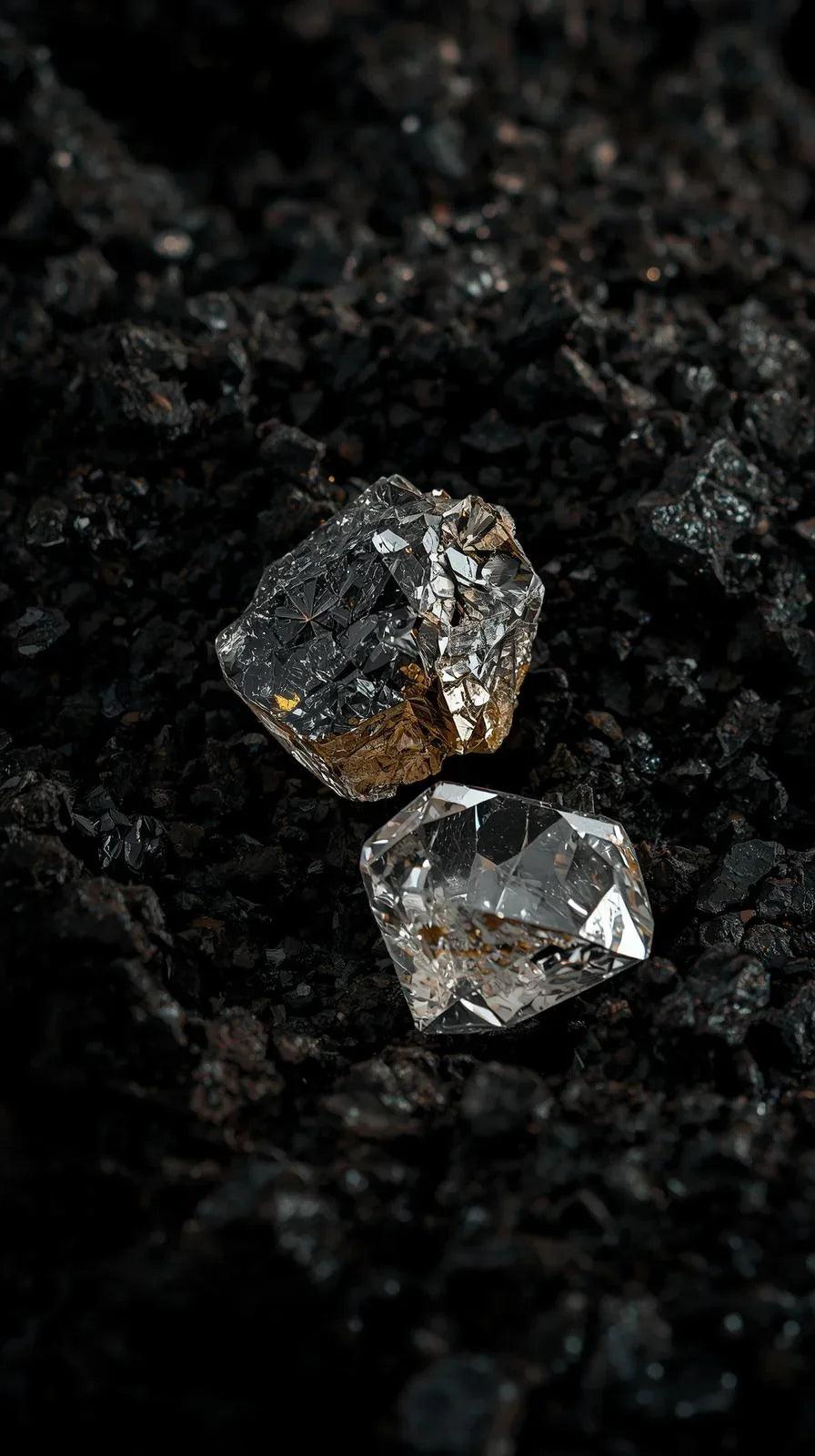
Whether a diamond is formed deep within the earth’s mantle or grown in a controlled laboratory environment, the end material is still crystallized carbon. Lab-grown diamonds are not simulants like cubic zirconia or moissanite. They are diamonds, created under controlled conditions.
They are produced using two primary growth methods: High Pressure High Temperature (HPHT) and Chemical Vapor Deposition (CVD). Both grow a diamond from a seed crystal by adding carbon under extreme conditions. GIA: HPHT and CVD diamond growth processes
GIA also explains the practical distinction clearly: the key difference between natural and laboratory-grown diamonds is origin and identification, not “realness.” GIA: Natural vs. laboratory-grown diamonds
The Mohs Scale and Hardness
Both natural and lab-grown diamonds rank at a 10 on the Mohs scale (scratch resistance). That means common jewelry metals will not scratch a diamond’s surface in normal wear — the physical resilience is the same because the structure is the same. GIA: Mohs scale and diamond hardness
Optical Refraction and Brilliance
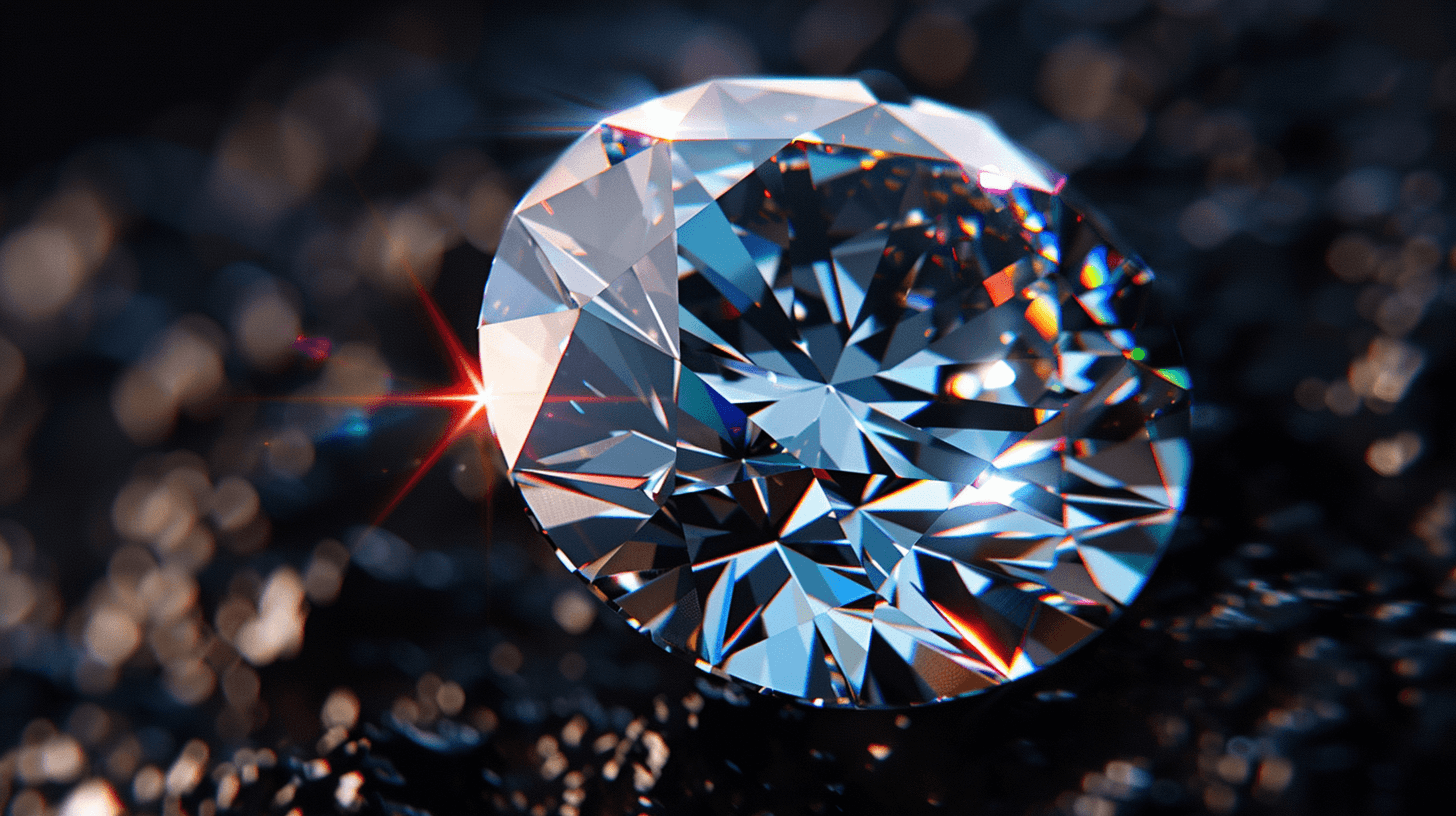
Because the atomic structure is the same, the physics of light behavior is the same. Brilliance and fire are driven by cut quality and facet geometry, not origin.
Diamonds are evaluated using the 4Cs — Cut, Color, Clarity, and Carat Weight — and those standards are widely used across the industry. GIA: Diamond grading scales and the 4Cs
The Origin Requirement
The material can be identical. Origin is where the distinction lives — and for the modern buyer, origin is not a secondary concern.
The Elimination of the Conflict Baseline
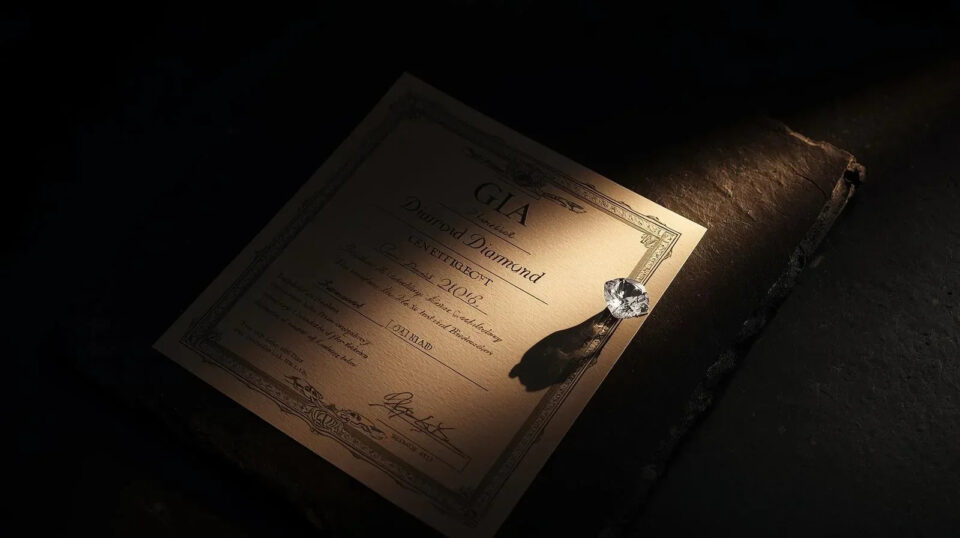
Historically, the origin of mined diamonds has been obscured by supply chains that consumers cannot verify. The modern standard rejects that vulnerability. Conflict-free compliance and transparent documentation are now baseline expectations.
For rough diamonds, the best-known international framework is the Kimberley Process Certification Scheme (KPCS). Kimberley Process: what it is (KPCS)
For polished diamonds and jewelry invoices, the World Diamond Council’s System of Warranties (SoW) extends warranty language through the supply chain. World Diamond Council: System of Warranties
In U.S. policy context, the State Department summarizes how the Kimberley Process certification works in trade. U.S. State Department: conflict diamonds and the Kimberley Process
The Continuum of Clarity
The mechanical advantage of the lab-grown process is consistency. Creating an unbroken line of brilliance — a tennis bracelet, for instance — requires dozens of stones with tightly matched color and clarity. Controlled growth makes that matching easier and more repeatable at scale.
The Architecture of the Silhouette
We strip away the unnecessary. The visual identity of our diamond pieces aligns with the Midnight aesthetic — stark, spacious, and unapologetic. The stones are engineered to cut through the dark.
The Singular Anchor: Diamond Rings
A ring takes the most kinetic impact of any jewelry piece. Because lab-grown stones share the same hardness and wear behavior as natural diamonds, they are built for daily utility — especially when set in heavy, solid gold.
The Unbroken Line: Tennis Bracelets
A lab-grown diamond tennis bracelet is a continuous loop set in an articulated setting — fluid mechanical movement delivering a sharp line of light against a dark wardrobe.
The Museum Effect
We do not set these stones in weak materials. We place them against solid gold. The stark white brilliance of carbon lattice against heavy yellow or white metal creates the necessary contrast — where the diamond becomes the only source of light in the room, and everything else recedes.
The Lab-Grown Diamond FAQ
| Question | Factual Answer |
|---|---|
| Do lab-grown diamonds test as “real” on a diamond tester? | Yes. Many standard testers measure thermal/electrical conductivity and will confirm a lab-grown diamond as diamond. Distinguishing origin typically requires advanced lab instrumentation. GIA: identification and origin |
| Will a lab-grown diamond get cloudy over time? | No. A diamond’s hardness and surface durability do not “fade.” Cloudiness is more associated with softer simulants that accumulate wear differently. Diamonds remain stable in normal use. GIA: Mohs scale and durability baseline |
| Can a jeweler tell the difference by looking at it? | Not reliably by appearance alone. A trained gemologist may need specialized testing to separate natural from laboratory-grown diamonds. GIA: natural vs lab-grown |
| Are lab-grown diamonds graded the same way? | They can be evaluated using the 4Cs (Cut, Color, Clarity, Carat Weight), the same fundamental language used across the industry. GIA: diamond grading scales and the 4Cs |
| How are lab-grown diamonds made (HPHT vs CVD)? | HPHT uses extreme pressure and temperature. CVD grows diamond from a carbon-rich gas onto a seed crystal. Both produce diamond material; the difference is growth environment and process controls. GIA: HPHT and CVD processes |
You do not have to choose between a structurally perfect material and a transparent origin. The technology exists to provide both.
A lab-grown diamond is not a compromise. It is a precise execution of carbon — physically comparable to a mined stone, and clearer on origin by design.
The facts are not on the side of ambiguity anymore.