The Diamond Tennis Bracelet: The Unbroken Timeline

Peelerie Editorial

Updated on

The Diamond Tennis Bracelet: The Unbroken Timeline - Peelerie

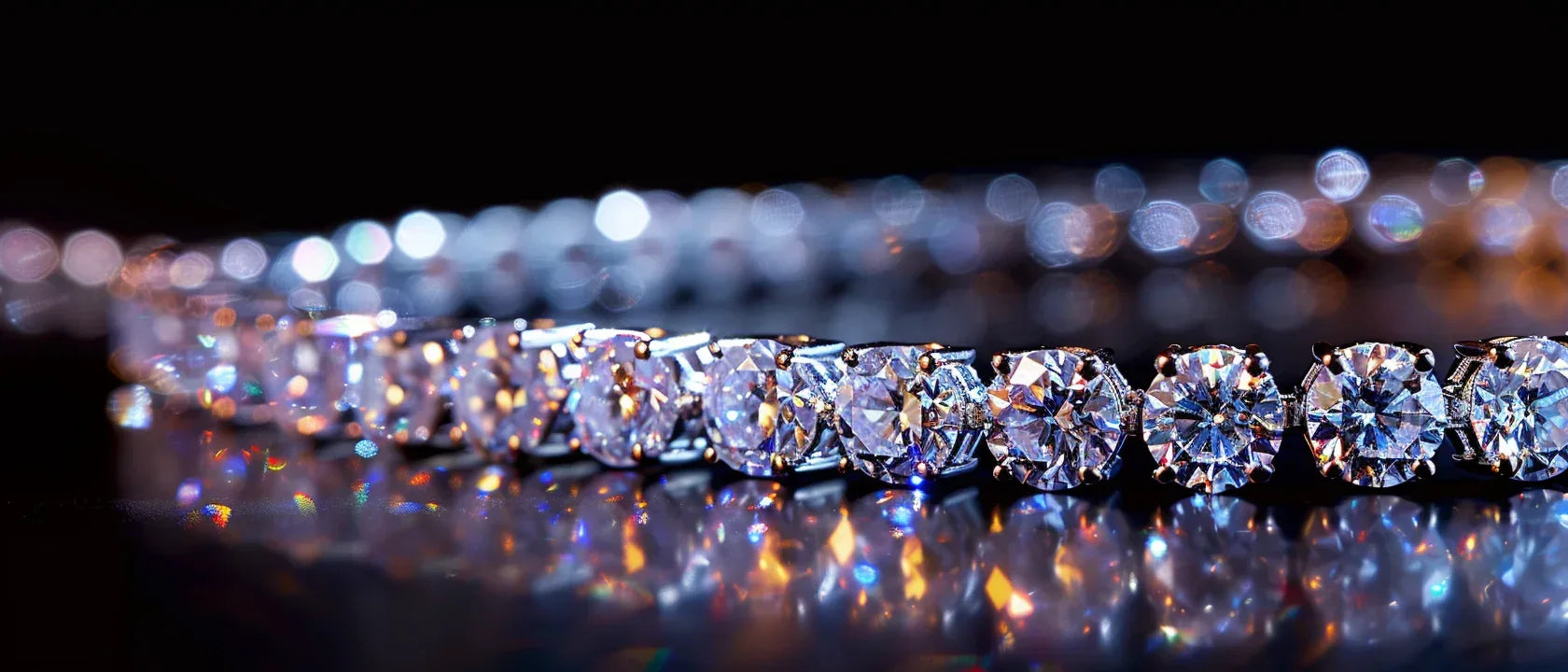
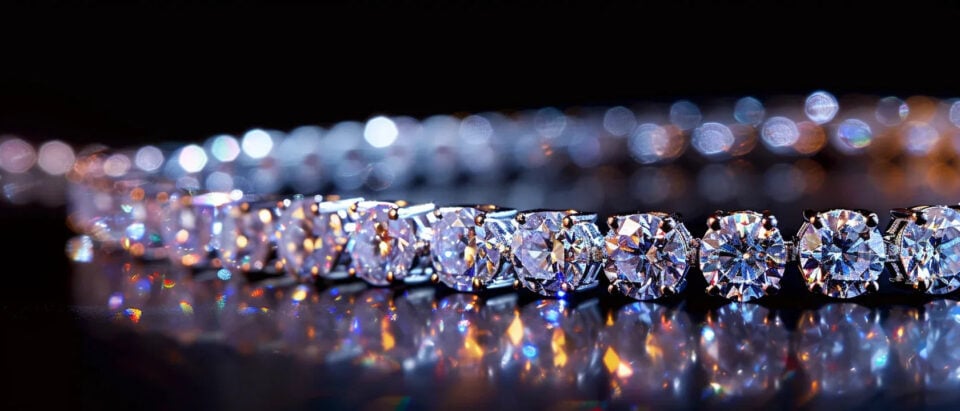
The wrist is a high-impact kinetic zone. Standard chain bracelets utilize negative space and interlocking metal to absorb that energy. The tennis bracelet operates on a different architectural principle — it is a continuous line of stones designed to keep the visual field unbroken.

We do not view this piece as a decorative accessory. It is a timeline. A physical record of intent, engineered to wrap continuously around the body without breaking the silhouette.

If you are securing a continuous marker, the engineering must hold. This is the definitive, factual guide to the articulated mechanics, the necessity of consistent clarity, and the architecture of the diamond tennis bracelet.

The Material Science of the Continuum

To create an unbroken line of light, the materials must be consistent. A single stone that shifts in color or clarity reads as a break in the timeline.

The Requirement of Consistency

A standard tennis bracelet requires dozens of individual diamonds. If one stone varies, the eye detects the disruption immediately. That is why matched parcels matter — and why controlled diamond growth can make tight matching easier at scale.

Lab-grown diamonds are real diamonds: crystallized carbon with the same key physical properties as natural diamonds. The difference is origin and identification, not “realness.” GIA: Natural vs. laboratory-grown diamonds

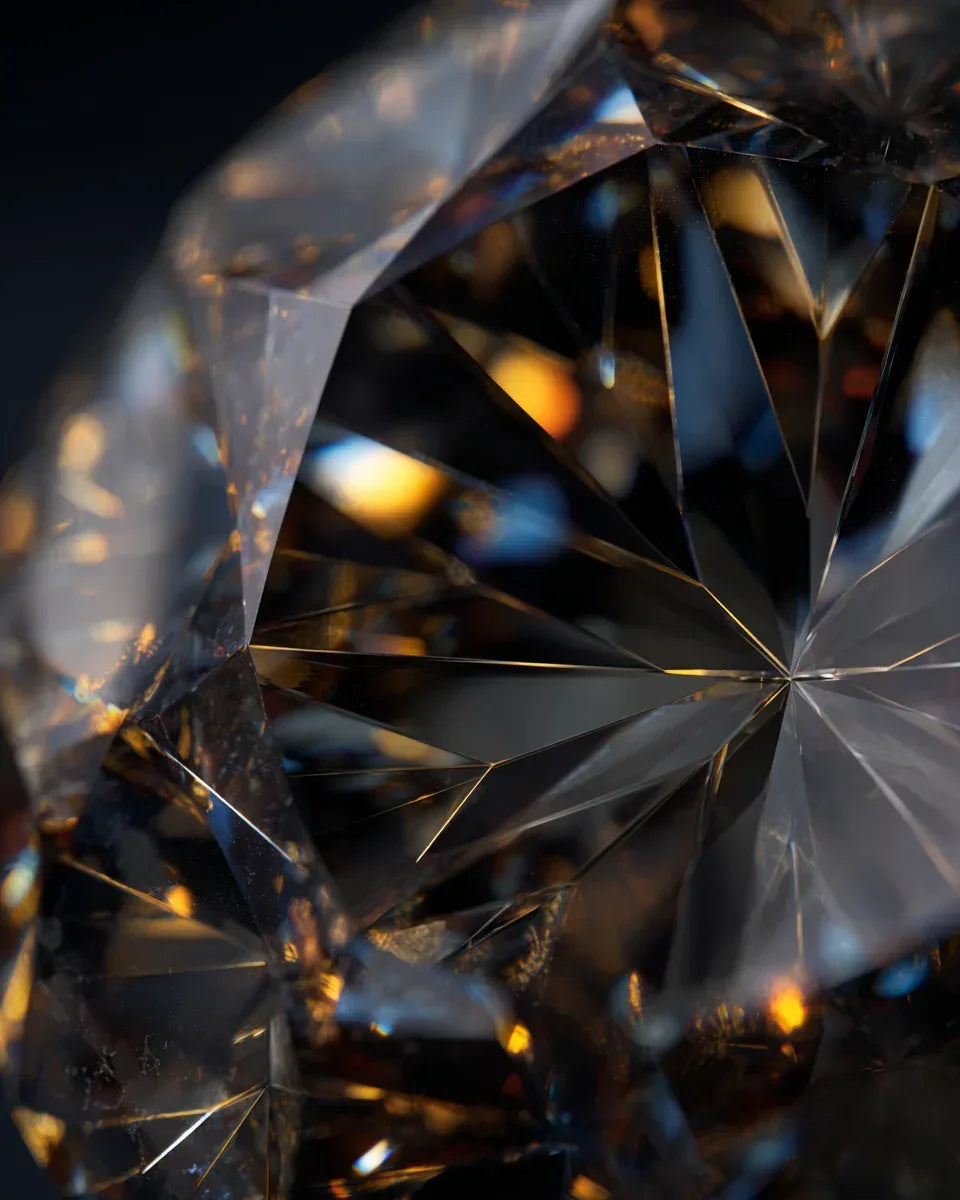
And the baseline physics is the same. Diamonds rank a 10 on the Mohs hardness scale — the highest level — which is why they hold up under daily wear. GIA: Mohs scale (diamond hardness)

The Four-Prong Vault Architecture

Securing dozens of diamonds in a high-impact kinetic zone requires precision. Each stone is seated in a metal basket and held by prongs that are folded over the stone’s crown. The goal is simple: secure contact points, consistent height, and no weak links.

For U.S. marketing clarity around metal claims (solid vs plated, etc.), the FTC’s Jewelry Guides govern how precious metal products should be described. FTC Jewelry Guides (16 CFR Part 23)

Articulated Mechanics and Environmental Utility

A rigid circle of metal cannot survive the biomechanics of the wrist. The tennis bracelet must flex with the body without compromising stone security.

The Engineering of the Hinge

The secret is articulation: small joints between settings that allow the bracelet to drape, bend, and move with the wrist. This disperses impact across multiple points rather than concentrating force in one place.

The Mechanical Box Clasp and Figure-Eight Safety

A continuous line of stones requires a closure that does not visually interrupt the piece. That’s why classic tennis bracelets often use a box clasp, frequently reinforced with a figure-eight safety. Redundancy is the point.

The Architecture of the Silhouette

We strip away the noise. The visual identity of a tennis bracelet aligns with the Midnight aesthetic — stark, high-contrast, and unapologetic.

The High-Contrast Layer

The tennis bracelet operates with stealth. It sits low against the wrist and disappears under a cuff — until it catches ambient light in dark spaces. A thin streak of white fire. No announcement required.

The Heavy Collision: Stacking with Gold

A thin line of diamonds gains authority when framed by heavy metal. Anchoring a tennis bracelet beside a solid gold chain bracelet creates a deliberate contrast: warm mass, cold light, one uniform.

The Tennis Bracelet FAQ

Question Factual Answer
Why is it called a “tennis” bracelet? The term is widely linked to tennis player Chris Evert and a match where her diamond line bracelet came undone and play paused while it was recovered — cementing the style’s association with tennis. GIA: How the tennis bracelet got its name
How loose should a tennis bracelet fit? It should not be tight like a cuff. A common rule is enough room for about one finger between bracelet and wrist — secure, but not restrictive.
Will a tennis bracelet flip over on the wrist? Poor weight distribution can cause rolling. Well-made tennis bracelets are designed to keep the stone side oriented outward through balanced settings and articulation.
Can I wear a diamond tennis bracelet every day? Yes, if it’s built correctly. Diamonds are extremely hard (Mohs 10), and the bracelet’s durability is primarily determined by the quality of its settings, joints, and clasp. GIA: Diamond hardness reference


A tennis bracelet is not an accessory. It is a physical record of continuity — a matched line of diamonds, articulated to move with the wrist, and secured with mechanical redundancy.

Most pieces you wear mark a single moment. This one marks the distance between all of them.

Explore Conflict-Free Diamond Tennis Bracelets

Back to blog